 Minstrong Technology Co., Ltd
Copper oxide-based catalytic materials possess multiple application potentials in environmental remediation that withstand mechanistic scrutiny: visible-light-driven photocatalytic degradation, Fenton-like oxidation across a wide pH range, efficient heavy metal adsorptive co-precipitation, and the purification of industrial flue gas through denitrification and VOCs removal. The multi-valence transformation and surface oxygen vacancy characteristics offer a low-cost catalytic pathway without noble metal loading for complex pollution scenarios. The following sections systematically elaborate from microscopic mechanisms to macroscopic applicability.
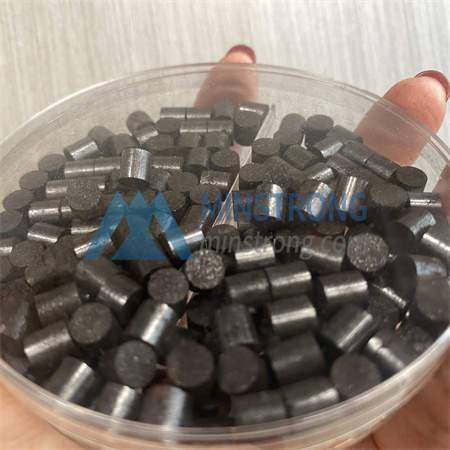
1. p-Type Semiconductor Characteristics and Intrinsic Catalytic Advantages of Copper Oxide
As a typical p-type narrow bandgap semiconductor (bandgap approximately 1.2–1.7 eV), copper oxide inherently possesses visible light harvesting capability. The coexistence or controlled transformation of CuO and Cu₂O enables the Cu(Ⅱ)/Cu(Ⅰ) redox couple to continuously regenerate during catalytic cycles. Surface oxygen vacancies not only lower the energy barrier for molecular adsorption but also serve as electron traps, suppressing photogenerated carrier recombination. These intrinsic properties allow copper oxide-based materials to activate green oxidants such as O₂ or H₂O₂ without complex doping, laying the foundational advantage in environmental catalysis.
2. Visible-Light Photocatalysis: Low-Energy Degradation of Organic Pollutants
In advanced wastewater treatment, copper oxide-based photocatalysts can directly utilize visible light to mineralize refractory organic compounds such as dyes, phenols, and antibiotics. The mechanism involves photogenerated electron-hole separation: electrons reduce surface-adsorbed oxygen to generate superoxide radicals (·O₂⁻), while holes oxidize water or hydroxide ions to produce hydroxyl radicals (·OH). These radicals non-selectively cleave organic molecules. By constructing heterojunctions with graphitic carbon nitride (g-C₃N₄) or titanium dioxide, the carrier separation efficiency is further enhanced, allowing copper oxide to maintain stable degradation rates under natural light conditions, significantly reducing energy consumption and operational costs.
3. Fenton-like Catalysis: Wide pH Applicability Beyond Conventional Limits
Traditional Fenton reactions rely on acidic conditions (pH 3–4) and tend to produce iron sludge. In contrast, copper oxide-based Fenton-like catalysts can efficiently catalyze H₂O₂ to generate ·OH under near-neutral or even weakly alkaline conditions. The key lies in the surface Cu⁺/Cu²⁺ cycle and oxygen vacancy-mediated accelerated electron transfer, which significantly boost the H₂O₂ decomposition rate and radical yield. Such catalysts exhibit remarkable removal efficiency for organic pollutants in complex water matrices like pharmaceutical wastewater and landfill leachate, while reducing the risk of secondary pollution, thus broadening the operational window for engineering applications.
4. Heavy Metal Ion Removal: Synergistic Adsorption and Catalysis
Copper oxide nanostructures exhibit strong adsorption capacity for heavy metal ions such as arsenic, lead, and chromium. The mechanism goes beyond electrostatic interaction: As(Ⅲ) can be oxidized to the less toxic and more easily adsorbed As(Ⅴ) through copper oxide-mediated catalysis, realizing a synergistic “oxidation-adsorption” removal process. High specific surface area nanosheets or flower-like structures further expose active sites, making them suitable for portable water purification devices or emergency treatment scenarios, embodying a structure-function integrated design philosophy.
5. Industrial Flue Gas Purification: Denitrification and Catalytic Oxidation of VOCs
In the field of flue gas denitrification, copper oxide-based catalysts demonstrate good activity for the selective catalytic reduction of NOₓ with NH₃. The surface acidic sites and redox sites synergistically promote NO oxidation to NO₂, accelerating the reaction through a fast SCR pathway to enhance low-temperature activity. For volatile organic compounds, electrophilic oxygen species on the copper oxide surface can completely oxidize toluene, formaldehyde, etc., into CO₂ and H₂O. Furthermore, by compositing with cerium-based or manganese-based oxides, the oxygen mobility can be further tuned to strengthen deep oxidation capacity, meeting increasingly stringent industrial emission standards.
6. Extended Applications in Antibacterial and Self-Cleaning Surfaces
The Cu²⁺ released from copper oxide can interact with microbial cell membranes causing membrane damage, while simultaneously catalyzing the production of reactive oxygen species for synergistic sterilization. In coatings, it not only inhibits biofilm formation but also continuously degrades attached organic pollutants via photocatalytic effects. When applied to water-contact surfaces or air purification filters, it combines active purification with passive protection, extending maintenance cycles.
With multi-mechanism synergy, low cost, and strong adaptability to working conditions, copper oxide-based materials are becoming a vital piece in the matrix of environmental catalytic technologies. From visible-light photocatalysis to advanced exhaust gas treatment, the mechanisms at each stage are clear and coherently connected, providing a reliable scientific basis for transitioning from laboratory research to engineering application.
author:kaka
date:2026/5/26
WeChat
Scan the QR Code with wechat