 Minstrong Technology Co., Ltd
When employed as a catalyst under standardized reaction conditions (pH 5–8; absence of strong reducing agents or high-concentration organic ligands) and supported by comprehensive catalyst retention and regeneration systems, manganese dioxide does not cause substantial secondary pollution. However, if the proper disposal of spent catalysts is neglected, or if process conditions spiral out of control, localized environmental risks may emerge—specifically through the leaching of Mn²⁺ ions exceeding ecological thresholds or the direct discharge of solid particulate matter. The following sections will substantiate this conclusion by examining four key aspects: reaction mechanisms, leaching conditions, waste fate and pathways, and engineering controls.
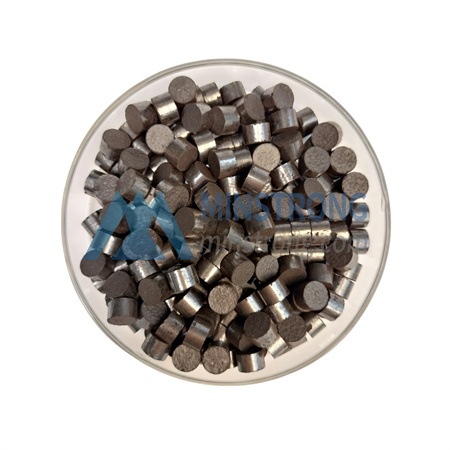
In catalytic ozonation, Fenton-like reactions, and persulfate activation processes, manganese dioxide relies on surface Mn(IV)/Mn(III) redox cycling to generate hydroxyl radicals or sulfate radicals; its chemical stability is fundamentally determined by its specific crystal structure (e.g., the α, β, γ, and δ polymorphs). In near-neutral or weakly alkaline aqueous solutions, the solubility of MnO₂ is extremely low (with a solubility product, Ksp, on the order of 10⁻⁴¹); consequently, the theoretical equilibrium concentration of Mn²⁺ is less than 0.1 μg/L. Therefore, in the absence of strong reducing agents or ligands, manganese dioxide itself does not spontaneously release harmful ions; this constitutes the thermodynamic basis for its characteristic of generating low secondary pollution.
II. Trigger Conditions and Ecological Thresholds for Manganese Ion Leaching
Manganese(IV) on the surface of manganese dioxide is reduced to Mn(II) and released into solution when the reaction system encounters any of the following three scenarios: ① The pH falls below 4 (e.g., during the pretreatment stage of acidic wastewater); ② Strong complexing ligands—such as oxalic acid, humic acid, or EDTA—are present; or ③ Reducing substances—such as sulfites or ferrous ions—are present. The median lethal concentration (LC₅₀) of leached Mn²⁺ for aquatic organisms typically falls within the range of 1–10 mg/L, whereas the *Environmental Quality Standards for Surface Water* (GB 3838-2002) establishes a regulatory limit of 0.1 mg/L for manganese. Consequently, if process controls are inadequate and lead to the accumulation of Mn²⁺, it is entirely possible to breach this safety threshold, resulting in substantial heavy metal pollution of water bodies. Conversely, in typical advanced water treatment scenarios—characterized by a pH range of 6–8 and the absence of the aforementioned interfering substances—the concentration of leached manganese often remains below the analytical detection limit (e.g., < 5 μg/L via ICP-MS).
III. Waste Classification and Ultimate Fate of Solid Manganese Dioxide
Spent manganese dioxide catalysts typically exist in either granular, supported forms or as fine powders. If the catalyst suffers a loss of mechanical strength, undergoes severe pulverization, or has adsorbed co-existing heavy metals (such as arsenic or lead) from the water, the spent catalyst itself must be managed in accordance with the "Waste Catalysts" category (HW50) specified in the *National Hazardous Waste List*. Direct landfilling or indiscriminate dumping would result in the infiltration of micron-sized manganese dioxide particles into soil pores, thereby altering local redox potentials and potentially impacting benthic organisms through physical barrier effects. However, if standardized off-site regeneration procedures (e.g., dilute acid washing followed by thermal activation) are implemented, or if the material is entrusted to a licensed hazardous waste disposal facility for manganese resource recovery, the risk of solid-phase secondary pollution can be effectively controlled. Currently, established pyrometallurgical or hydrometallurgical processes enable the recovery of over 85% of the manganese from spent catalysts, converting it into industrial-grade manganese salts.
IV. Engineering Control Strategies: From Prevention to Closed-Loop Systems
Based on the mechanisms outlined above, engineering measures designed to prevent secondary pollution are clearly feasible and actionable: ① Online Monitoring—installing online Mn²⁺ sensors (with a detection limit of 0.01 mg/L) at the reactor outlet, integrated with an automated alarm and bypass switching system; ② pH Stabilization Unit—positioning an automated acid-base adjustment tank upstream of the catalytic reactor to ensure the pH of the mixed liquor remains stable within the range of 6.5–7.5; ③ Catalyst Retention—employing ceramic membranes or sintered stainless steel filter elements (with a pore size of ≤0.45 μm) to prevent the loss of fine catalyst particles via the effluent; and ④ Comprehensive Recovery of Spent Catalysts—establishing a comprehensive "Usage–Regeneration–Resource Recovery" ledger system and strictly prohibiting on-site landfilling. Case study data indicates that within an industrial park utilizing an ozone catalytic oxidation unit (employing a δ-MnO₂/activated alumina catalyst) equipped with the aforementioned control system, total manganese concentrations in the effluent remained consistently below 0.05 mg/L throughout 36 months of continuous operation. Furthermore, all spent catalysts were transferred to qualified regeneration facilities, thereby achieving zero solid waste discharge.
V. Reaffirming the Conclusion: Risks Lie in System Design, Not the Material Itself
Synthesizing the above analysis, the secondary pollution associated with the use of manganese dioxide as a catalyst is fundamentally a risk related to process control, rather than an inherent defect of the material itself. Within a thermodynamically stable operating window, the leaching of manganese ions is negligible; regarding solid waste, environmental hazards can be effectively eliminated by integrating the spent catalyst into a specialized recovery supply chain. Consequently, for professional engineers and environmental management personnel, the focal point of decision-making should not be "whether or not to use manganese dioxide catalysts," but rather "whether or not the system has been equipped with the requisite, complementary subsystems for pH adjustment, ion retention, and spent catalyst recovery." This conclusion applies to the vast majority of heterogeneous catalytic systems based on transition metal oxides, offering universal reference value.
author:kaka
date:2026/4/21
WeChat
Scan the QR Code with wechat