 Minstrong Technology Co., Ltd
Don't rush to replace deactivated hopcalite catalysts! This simple method restores 92% efficiency. hopcalite catalysts (copper manganese oxide) are widely used in mine rescue, gas masks, and air purification due to their moderate price and high catalytic efficiency for CO at room temperature. However, catalysts often deactivate rapidly due to "poisoning" during use. Direct replacement is not only costly but also causes equipment downtime. So, is there a simple and effective method to "bring back to life" a deactivated hoggarat catalyst?
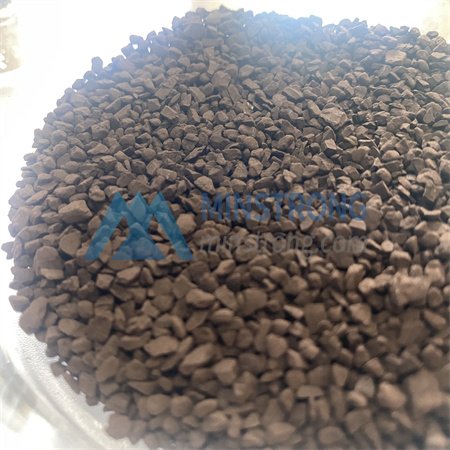
I. Why do catalysts "die"? Understanding three types of deactivation
Hopcalite catalyst deactivation is not a natural death; in most cases, it is reversible poisoning:
Moisture poisoning (most common): In high humidity environments, water molecules occupy active sites, leading to a decrease in specific surface area. Data shows that after one year of use at 50% humidity, the specific surface area can drop from 200 m²/g to 120 m²/g, and the efficiency drops from 95% to 70%.
Carbonate/Carbon Deposition: CO undergoes a disproportionation reaction on the active surface, forming carbon or carbonate coatings that clog the pores.
Hot Sintering (Irreversible): If the operating temperature exceeds 500℃, the amorphous structure will transform into a crystalline state (e.g., CuMn₂O₄ spinel), causing permanent deactivation.
II. Simplest Solution: Heating Regeneration
For deactivation caused by water poisoning and surface deposition, heating regeneration is recognized as the simplest and most effective method. The principle is to desorb adsorbed water molecules and carbonates by appropriately increasing the temperature, restoring the active sites.
Key Operating Parameters:
Water Poisoning Scenario: Place the deactivated catalyst in an environment of 100-130℃ and heat for 4-10 minutes. For example, in a CO purification case in a mine, the efficiency of the original failed sample was only 65%. After heating at 120℃ for 8 minutes, the efficiency was restored to 92%, directly avoiding tens of thousands of yuan in replacement costs.
For severe carbon buildup: the temperature can be increased to 150-200℃, and the heating time appropriately extended.
III. Important Reminder: Not all deactivation can be "revived"
If the catalyst has been exposed to a high-sulfur environment or subjected to high-temperature (>500℃) conditions for a long period, its structure has undergone irreversible sintering. In this case, heat regeneration is ineffective, and replacement is necessary. Therefore, accurately determining the cause of deactivation is a prerequisite for selecting a regeneration solution.
For scenarios with high humidity and frequent catalyst replacement, periodic hot regeneration at 120℃ can extend catalyst life by 1-2 times and reduce annual overall operation and maintenance costs by more than 30%. If you are facing the problem of declining hogallat agent efficiency, you might as well try heat regeneration first—mastering this method is equivalent to providing a "low-cost insurance" for your purification system.
author:kaka
date:2026/3/26
WeChat
Scan the QR Code with wechat