 Minstrong Technology Co., Ltd
Why Does High Humidity Cause Manganese Dioxide Catalysts to "Fail"?
To solve this problem, one must first understand the fundamental nature of the deactivation process. Research indicates that there are two primary pathways leading to the deactivation of manganese dioxide catalysts in high-humidity environments:
1.. Competitive Adsorption:Water molecules preferentially occupy the active sites on the catalyst surface, establishing a competitive adsorption relationship with target reactants such as VOCs. Once the surface of the MnOx catalyst becomes occupied by water molecules, the oxidation reactions involving the target pollutants are effectively "blocked."
2. Surface Poisoning:Hydroxyl species generated by the dissociation of water molecules on the catalyst surface gradually accumulate at the lattice oxygen sites. These species are difficult to desorb and remove, ultimately leading to the poisoning and deactivation of the catalyst's active sites. Research conducted by Professor Lu Lu’s team at Nanjing University has further revealed that the symmetry of oxygen vacancies dictates the mechanism of water molecule activation: asymmetric oxygen vacancies facilitate the dissociation of water molecules to form active hydroxyl-oxygen species, thereby enhancing catalytic activity under humid conditions; conversely, symmetric oxygen vacancies hinder water dissociation, leading to competitive adsorption.
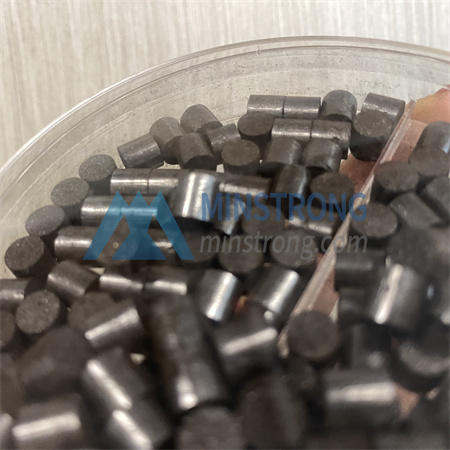
Four Major Solutions: Systematically Overcoming the Challenge of Deactivation Under High Humidity
First, Optimize the Active Components of the Catalyst.Through elemental doping engineering—specifically by introducing elements such as Cr, Nb, Ru, and Rh—the formation energy of lattice oxygen vacancies can be moderately increased. This weakens the adsorption strength of water molecules, thereby fundamentally improving the catalyst's water tolerance. Compounding traditional Mn-based catalysts with rare earth or noble metal elements (e.g., Ce, Ag) to form stable redox pairs constitutes an effective strategy for enhancing moisture resistance. For instance, under conditions involving 5% water vapor, the T90 value (the temperature at which 90% conversion is achieved) for the catalytic oxidation of acetone using a CeMnOx bimetallic oxide catalyst remains at 154°C.
Second, Implement Surface Hydrophobization Treatments. Applying external hydrophobic treatments to the catalyst effectively minimizes the encroachment of water molecules upon active sites. By coating the catalyst surface with thin hydrophobic layers—such as polytetrafluoroethylene (PTFE) or siloxanes—water molecules are blocked from contacting the active sites without impeding the diffusion of the target gas molecules.
Third, Strengthen Engineering Pre-treatment Measures. Prior to the entry of waste gas into the catalytic reactor, a two-stage condensation scheme or high-efficiency mist eliminators should be employed to maintain the relative humidity below 50%. Engineering practice has demonstrated that adopting a tiered humidity control strategy can extend the catalyst's service life by over 40% and boost the system's overall energy efficiency by 18% to 22%.
Fourth, Establish a Thermal Regeneration Mechanism. For catalysts that have undergone water-induced deactivation, catalytic activity can be restored through thermal regeneration. For example, by heating a deactivated catalyst in an environment of 100–130°C for 4 to 10 minutes, its catalytic efficiency can be restored to 92% of its initial level. Incorporating interfaces for *in-situ* thermal regeneration into the system design allows for maintenance to be performed without the need for system shutdown.
author:kaka
date:2026/4/16
WeChat
Scan the QR Code with wechat