 Minstrong Technology Co., Ltd
With increasingly stringent environmental regulations, efficient, stable, and economical VOC treatment technologies have become a necessity for enterprises. Compared to technologies such as high-temperature incineration, photocatalysis, and plasma, catalytic oxidation (CO/RCO) uses catalysts to lower the reaction activation energy, achieving flameless decomposition of VOCs at 200–350℃, ultimately converting them into carbon dioxide and water, combining safety and economy.
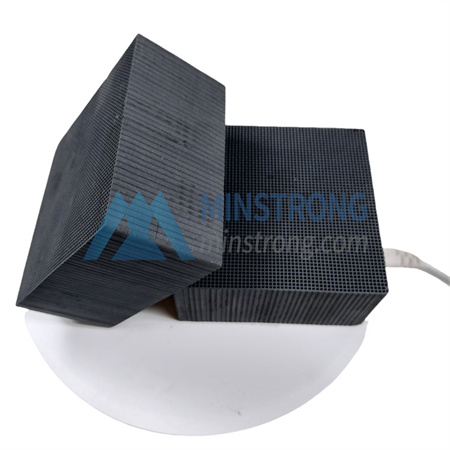
VOC catalysts are mainly divided into three categories: precious metal catalysts, non-precious metal catalysts, and composite catalysts. Precious metal catalysts, with Pt and Pd as active components, exhibit good low-temperature activity, low ignition temperature, and wide applicability to various components, making them suitable for clean applications in spraying, packaging, and printing. Non-precious metal catalysts, primarily composed of transition metal oxides, are low-cost and resistant to poisoning, commonly used in chemical processes and applications with complex waste gas compositions. Composite catalysts balance activity and stability, handling waste gases with fluctuating concentrations and trace impurities, offering even wider applicability.
In practical selection, key considerations include the waste gas composition, concentration, flow rate, temperature, and impurity content. Sulfur, chlorine, silicon, and phosphorus can easily poison catalysts, typically requiring pretreatment. For large-volume, low-concentration waste gases, a combination of zeolite rotor concentration and catalytic combustion is often employed. Proper selection and layout can significantly reduce equipment investment and operating costs, and extend catalyst lifespan.
Stable catalyst operation depends on proper maintenance: controlling reaction temperature to prevent overheating and sintering, regular purging to reduce carbon buildup and blockage, and effective front-end dust and mist removal. Under normal operating conditions, catalysts can be used stably for several years, providing a reliable guarantee for enterprises to meet long-term emission standards.
With the upgrading of environmental standards and technological iterations, low-temperature high-activity, high-toxicity resistance, and low-cost characteristics will become the development direction for VOC catalysts, providing continuous support for the green and low-carbon upgrading of industry.
Author: Hazel
Date: 2026-03-05
WeChat
Scan the QR Code with wechat