 Minstrong Technology Co., Ltd
Why is Deep Deoxygenation of High-Purity
Nitrogen Becoming Increasingly Important?
In most industrial settings, "99.99% nitrogen" does not necessarily imply that the gas is sufficiently pure. For many sensitive processes, even oxygen concentrations of just a few tens of parts per million (ppm) can lead to serious issues.
For example:
Lithium battery materials are prone to
surface oxidation when exposed to oxygen environments;
Metal powders may experience a decline in
catalytic activity;
Oxygen present in semiconductor processes can
compromise the quality of thin-film deposition;
Oxygen in organic synthesis reactions may
trigger unwanted side reactions;
Trace oxygen within gloveboxes can
undermine experimental stability and reproducibility.
Consequently, an increasing number of systems now require oxygen levels to be maintained below 1 ppm—or even down to the parts-per-billion (ppb) level.
Against this backdrop, "deep deoxygenation" is no longer merely a matter of simple filtration; rather, it has become a critical core component of high-purity gas engineering.
Why Do Conventional Adsorbents Struggle to
Achieve Deoxygenation Levels Below 0.5 ppm?
Many users initially consider using molecular sieves, activated alumina, or other adsorption-based materials. However, when the target oxygen concentration falls below 1 ppm, relying solely on physical adsorption typically presents several challenges:
Limited Adsorption Capacity
The adsorbent gradually becomes saturated,
necessitating frequent regeneration or replacement. Furthermore, when the inlet
oxygen concentration fluctuates significantly, the stability of the outlet
concentration is compromised.
Sensitivity to Humidity
The performance of certain adsorption
materials degrades markedly in high-humidity environments, leading to premature
oxygen breakthrough.
Difficulty in Maintaining Ultra-Low Oxygen Concentrations Stably Over the Long Term
Adsorption methods are generally better suited for coarse deoxygenation rather than ultra-deep purification.
Consequently, in industrial high-purity nitrogen systems, the more prevalent approach is:
Catalytic Reaction + Downstream Drying
This involves converting the oxygen using a catalyst and then utilizing a drying system to remove the reaction byproducts.
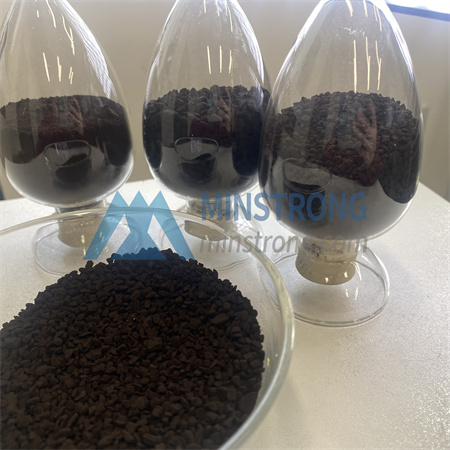
What is the Core Principle Behind Deep
Deoxygenation Catalysts?
The mainstream deep deoxygenation solutions currently employed in industry are, in essence, based on catalytic hydrogenation-deoxygenation reactions.
The reaction mechanism is as follows:
2H₂ + O₂ → 2H₂O
In this system, trace amounts of hydrogen
are introduced into the nitrogen stream. Under the influence of a catalyst, the
oxygen reacts rapidly with the hydrogen to form water vapor, which is
subsequently removed using molecular sieves or dryers.
The advantages of this method are quite distinct:
Rapid reaction kinetics;
Capable of achieving ultra-low residual
oxygen levels;
Stable continuous operation;
Low pressure drop;
Suitable for high-flow-rate systems;
Easily adaptable to automated control.
As a result, it is widely utilized in purification systems for high-purity nitrogen, high-purity argon, and other inert gases.
Why Are Copper-Based Deoxygenation
Catalysts Well-Suited for ppm-Level Oxygen Purification?
In the field of deep deoxygenation,
copper-based catalysts have long been widely adopted for several key reasons:
High Activity at Low Temperatures
The active copper-based components
facilitate the reaction between oxygen and hydrogen at relatively low
temperatures, resulting in lower energy consumption for the system.
Some systems can even operate at
temperatures approaching ambient conditions.
High Conversion Efficiency for Trace Oxygen
Within the oxygen concentration range of
tens to thousands of ppm, copper-based catalysts typically exhibit high
reaction efficiency.
This is a primary reason why they are particularly suitable for the "fine deoxygenation" of high-purity gases.
Minimal Side Reactions
In a high-purity nitrogen environment, copper-based systems generally do not introduce complex byproducts, making them ideally suited for the purification of electronic-grade gases.
Facilitating Long-Term Continuous Operation
Under reasonable operating conditions, the catalyst can maintain a prolonged service life, thereby reducing the frequency of system shutdowns for maintenance.
What Factors Influence Deoxygenation
Efficiency?
Many users have observed that the same catalyst can yield vastly different results when deployed in different systems.
In reality, the final residual oxygen content is determined not solely by the catalyst itself, but by the entire process system.
Is the Hydrogen-to-Oxygen Ratio Appropriate?
Theoretically, a sufficient amount of hydrogen is required to drive the reaction; however, an excess of hydrogen can increase the burden on downstream processing stages.
Consequently, precise control over the dosage of trace hydrogen introduced into the system is typically essential.
Is the Temperature Stable?
Although copper-based catalysts exhibit activity at low temperatures, excessively low temperatures can still result in a reduced reaction rate.
Conversely, excessively high temperatures may compromise the catalyst's service life.
Is the Gas Humidity Excessive?
Water vapor can interfere with specific active sites on the catalyst surface; moreover, prolonged exposure to high-humidity environments may induce structural changes within the catalyst.
Therefore, effective upstream water removal is typically of critical importance.
Is the Space Velocity Matched Correctly?
An excessively high gas flow rate reduces the contact time between the gas and the catalyst, potentially preventing the complete conversion of oxygen.
For large-scale systems, the dimensions of
the catalyst bed often require specific redesign to ensure proper alignment
with the intended space velocity.
How to Design a Stable, High-Purity Nitrogen
Deoxygenation System?
A mature, deep-deoxygenation system typically involves far more than the simple "loading of catalyst."
A complete system typically comprises the following components:
Upstream filtration;
Flow control mechanisms;
Trace hydrogen injection;
Catalytic reactor;
Downstream dryer;
In-line oxygen analyzer;
Automated control module.
Among these components, the most critical factor is:
The proper alignment of catalyst performance
with process parameters.
For instance:
Different oxygen concentrations necessitate
different catalyst bed volumes;
Different flow rates require corresponding
adjustments to residence times;
Different dew-point specifications demand
distinct drying strategies.
Consequently, high-purity gas purification is fundamentally a matter of systems engineering, rather than merely an issue concerning a single material.
Future Development Trends for Deep-Deoxygenation Catalysts
Driven by advancements in the semiconductor, new energy, and high-end manufacturing sectors, the requirements for high-purity gases are continuously becoming more stringent.
Future development efforts for deoxygenation catalysts will primarily focus on the following areas:
Lower Operating Temperatures
To reduce system energy consumption and
enhance operational safety.
Enhanced Moisture Resistance
To minimize the need for complex upstream
pretreatment processes.
Greater Mechanical Strength
To ensure compatibility with large-scale industrial
circulation systems.
Lower Residual Oxygen Levels
To facilitate a gradual transition toward
oxygen control at the parts-per-billion (ppb) level. Extended Lifespan and
Low-Maintenance Design
Reducing long-term operating costs.
These factors are also driving the continuous optimization of copper-based composite catalytic materials.
When the oxygen content in high-purity nitrogen needs to be reduced from 50 ppm to below 0.5 ppm, catalytic deoxygenation technology demonstrates greater stability and industrial applicability compared to traditional adsorption methods. Its core principle involves utilizing deep deoxygenation catalysts—such as those based on copper—to facilitate the reaction between oxygen and hydrogen, thereby converting the oxygen into water, which is subsequently removed through drying. In practical applications, factors such as catalyst performance, temperature, humidity, space velocity, and system design directly influence the final purification results. For high-purity gas systems, achieving long-term, stable control of ultra-low oxygen levels is, fundamentally, the result of the synergistic optimization of catalytic materials and process engineering.
author:kaka
date:2026/5/9
WeChat
Scan the QR Code with wechat